
Neurodiversity-Affirming Therapy for Children, Teens & Families
Amelia Hatcher-Kay, LLMSW
Location: Virtual & In-persoN
Sometimes the world feels like too much.
Too much sensory input. Too many demands. Too many expectations. Or the exhaustion of feeling misunderstood again and again.
For autistic, ADHD, and other neurodivergent children and teens, living in a world that isn’t always designed for the way their brain works can be overwhelming, for them and for the people who love them.
I provide neurodiversity-affirming therapy for toddlers, children, teens, young adults, and families, with particular experience supporting autistic children with a wide range of communication, behavioral, sensory, and emotional needs, including children with demand-avoidant or PDA-like profiles.
I also work with children and families who have experienced trauma, including both acute traumatic experiences and the cumulative stress that can come from repeatedly navigating environments that don’t understand or accommodate a child’s needs.
Your child doesn’t need to become someone else.
Maybe your child recently received an autism, ADHD, or other neurodevelopmental diagnosis, and you want them to have a safe place to understand what that identity means for them.
Maybe you’re trying everything you know to connect, but your child often seems to be in their own world and you want help learning how to meet them there.
Maybe school has become a constant source of stress because of learning challenges, sensory needs, relationships, emotional regulation, or behavior.
Or maybe your child holds it together all day at school only to completely fall apart the moment they walk through the front door.
Therapy can help your child better understand how their brain works, what helps them feel regulated and safe, how to communicate their needs, and how to advocate for themselves, without asking them to mask or change who they are.
Therapy that enters your child’s world
As a neurodivergent clinician, I use a strengths-based, neurodiversity-affirming, and trauma-informed approach.
Rather than trying to make a child appear more “typical,” I focus on understanding their experience, building authentic connection, identifying what helps their nervous system feel safe, and supporting skills that genuinely improve their quality of life.
Depending on the child, therapy might involve:
Play
Art and creative expression
Movement
Conversation
Sensory supports
Emotional regulation strategies
Self-advocacy and communication skills
Parent-child work
A combination of all of the above
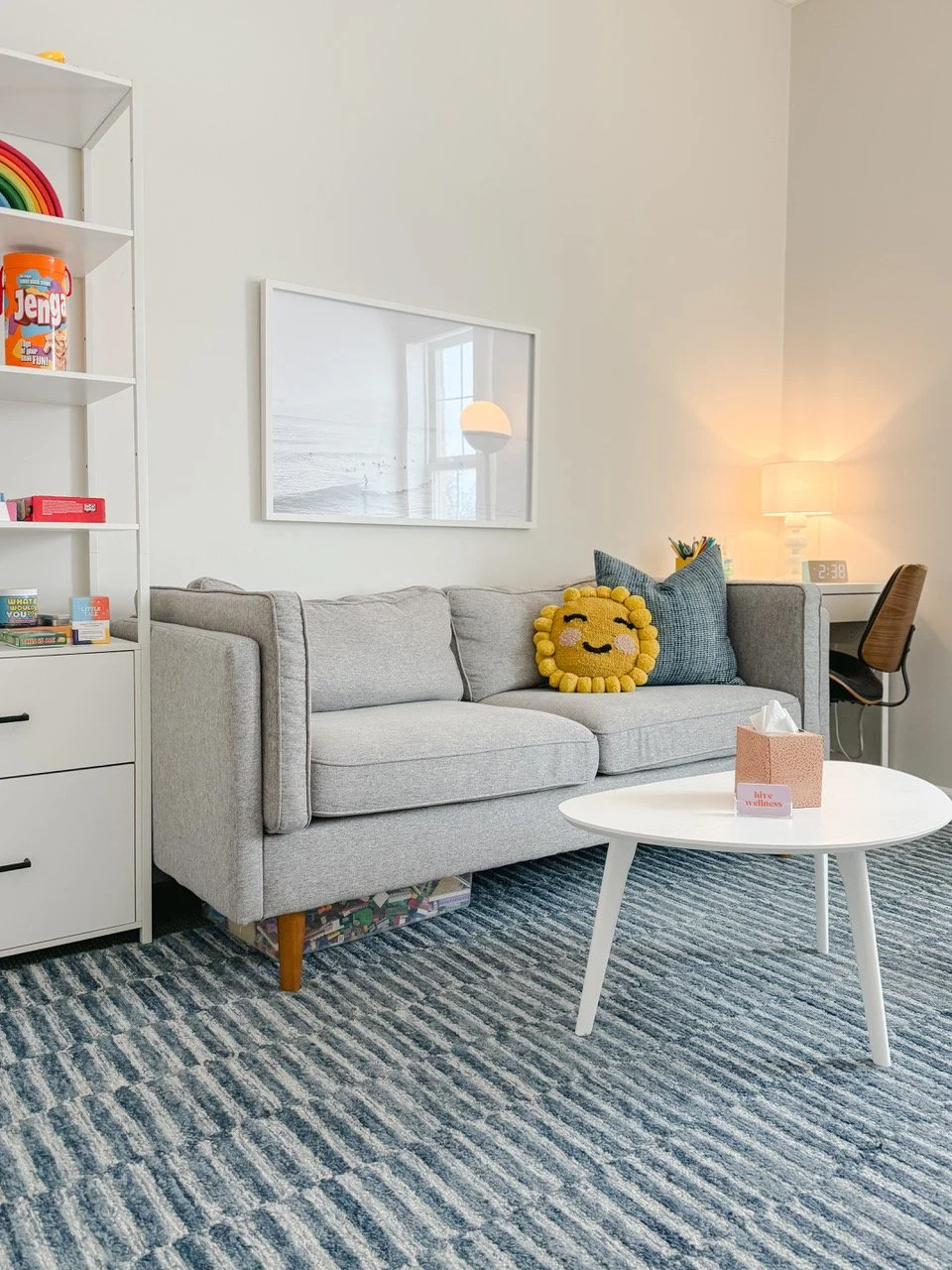
There is no expectation to mask in my therapy space. We figure out what helps your child feel comfortable, connected, and understood, then work together to bring those supports into home, school, relationships, and everyday life.
And when dysregulation inevitably happens, we focus on developing tools that actually work for your child, rather than expecting them to simply “try harder.”
Support for parents and families, too
Neurodivergent children don’t exist in isolation, which means therapy often works best when caregivers are supported too.
Using relational and attachment-oriented approaches, including approaches developed specifically for children with developmental disabilities, I help parents better understand their child’s communication, behavior, nervous system, and emotional needs.
The goal isn’t perfect parenting or perfect behavior.
It’s stronger connection, greater understanding, fewer power struggles, and a relationship that gives your child a secure foundation as they grow.
Trauma-informed care for neurodivergent children
Neurodivergent children can experience trauma for many reasons.
Sometimes there is an identifiable traumatic event. Other times, trauma develops through repeated experiences of being misunderstood, overwhelmed, punished for neurodivergent behaviors, pressured to mask, or placed in environments that consistently exceed a child’s capacity.
I help children and families make sense of those experiences while building safety, connection, emotional regulation, and trust.
Find a neurodiversity-affirming therapist
If you’re looking for a neurodiversity-affirming therapist for an autistic or ADHD child, support for emotional regulation or demand avoidance, or a trauma-informed child therapist who understands both the challenges and the very real joys of raising a neurodivergent child, I’d love to connect.
You don’t have to figure all of this out alone. Schedule a free consultation to see if we’re a good fit.

-
Amelia specializes in working with neurodivergent children, teens, and young adults, especially autistic children (including those with demand avoidant profiles, gestalt language-processors, and AAC users), navigate the challenges associated with living in a world that isn’t built for their brains. She also works with people with other developmental disabilities, children dealing with anxiety, and those who have experienced trauma, and she has an interest in early childhood and parent-child work.
-
Limited Licensed Master of Social Work (LLMSW) - Michigan
University of Michigan School of Social Work - Master of Social Work (MSW)
-
Amelia accepts the following insurances:
AETNA (Commercial)
AETNA Better Health
Ambetter by Meridian
ASR
Blue Cross Blue Shield (Commercial)
Blue Cross Complete
Blue Care Network (Commercial)
Cofinity
First Health
Meridian Medicaid
Molina (Marketplace + Medicaid)
Priority Health (Commercial + Medicaid)
United Healthcare Community Plan (Medicaid)
Get to Know Amelia
IDEAL VACATION:
Exploring, whether that is hiking or walking around a city.
FAVORITE WAY TO UNWIND:
Listening to an audiobook or podcast while baking or walking the dog.
a life-changing piece of advice you’ve received:
Stop trying to be anyone else. Be you!
skill you’re currently working on:
I’m trying to be intentional about finding balance between work and responsibilities and time to relax.
favorite part about BEING A THERAPIST:
I really love connecting with kids. When a child feels safe to authentically express themselves and try new things, it genuinely makes me so happy!